

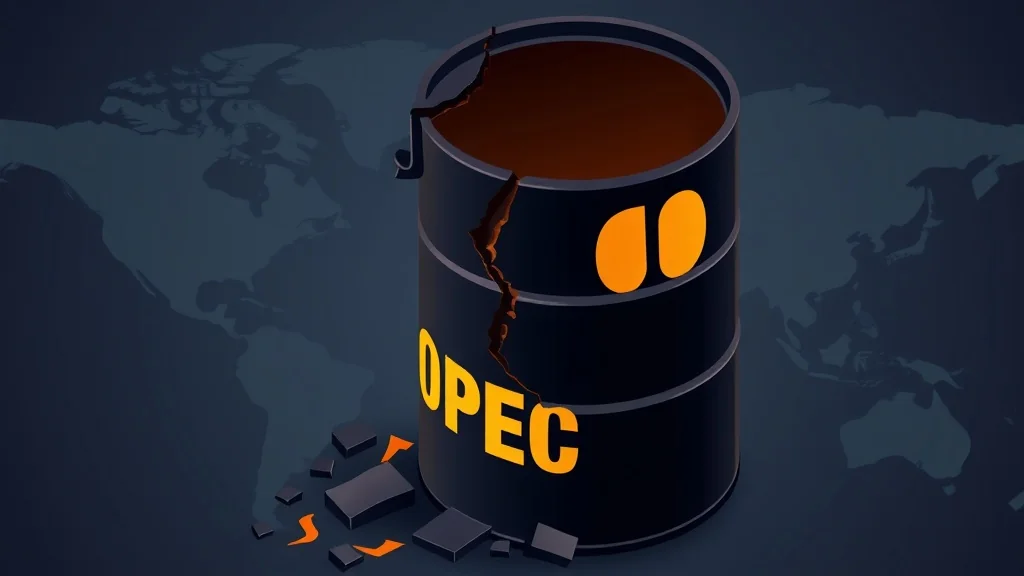
UAE exits OPEC: biggest blow to the cartel in decades, outlook for cheaper and more volatile oil
The UAE's exit weakens OPEC's coordination capacity, raises the risk of a price war, and points toward lower oil prices — negative for the energy sector but positive for commodity importers.
- 01The UAE announced its exit from OPEC effective May 1, 2026 — the largest blow to the cartel in its history; the UAE is the third-largest producer with a 13% share of production capacity.
- 02Current UAE output stands at approximately 1.9 mb/d, with total capacity at 4.3 mb/d and a target of 5 mb/d by 2027 — signaling a significant supply increase ahead.
- 03Short-term impact is muted by the Strait of Hormuz blockade; over a longer horizon, the UAE's departure raises the probability of lower oil prices and higher price volatility.
- 04The core driver is UAE frustration with Saudi-led production quotas — Abu Dhabi prioritizes volume maximization over price support.
- 05Geopolitical context: Iran conflict tensions, criticism of Riyadh's passivity, and ongoing discussions over a USD swap line between Washington and Abu Dhabi likely accelerated the decision.
- 06Precedents from 2019 (Qatar), 2020 (Ecuador), and 2024 (Angola) illustrate a fragmentation trend; the key question is whether other producers will follow the UAE.
Portfolios with global energy exposure enter an environment of structurally weaker OPEC price support — relevant context for sector allocation discussions. Lower oil prices also represent a disinflationary factor that may influence CNB rate expectations and bond yields — a topic to monitor in fixed-income client portfolios.
As a net oil importer, the Czech Republic would benefit from structurally lower prices through reduced inflation and industrial costs; energy-sector holdings in Czech portfolios face a negative outlook. Higher oil price volatility increases uncertainty for export-oriented firms reliant on energy inputs.